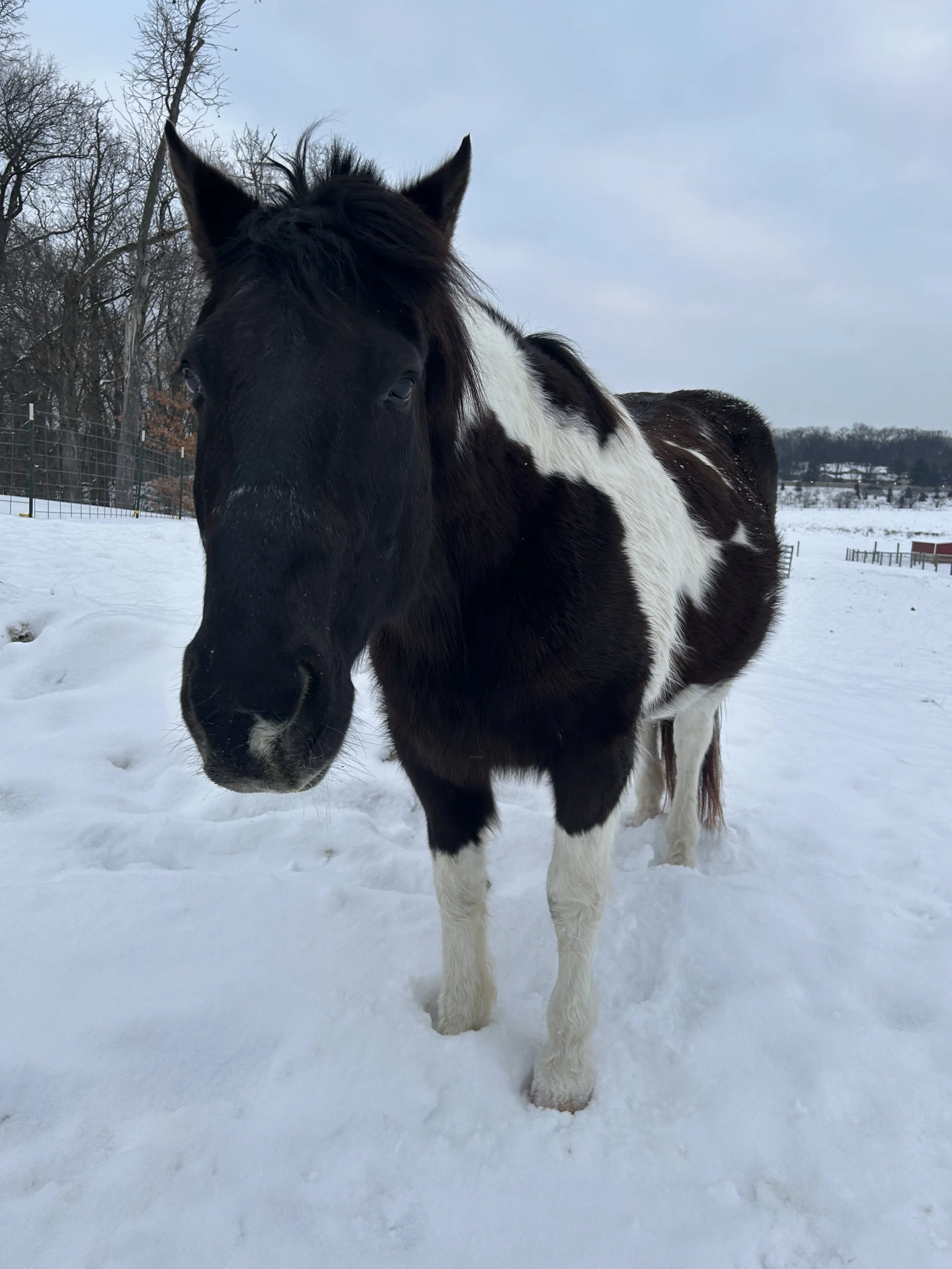
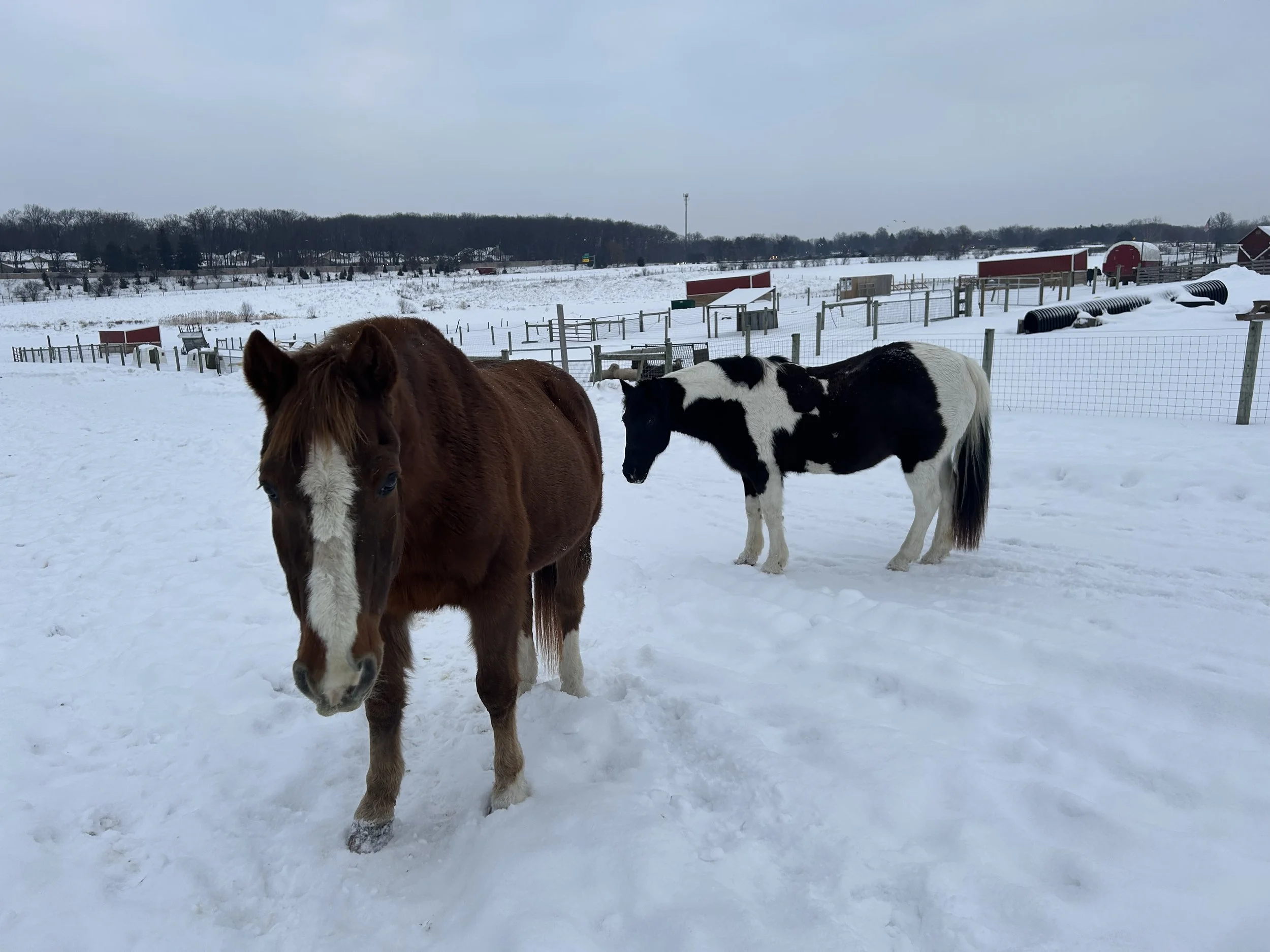
To blanket or not to blanket that is the question . .
While you are driving around and you see horses in the winter with no blankets on, Don’t fret! They are staying toasty warm. People blanket (rug) horses for a few practical reasons—mostly comfort, health, and management. The short version: it’s about helping the horse cope with conditions that aren’t “natural horse living.”
Here’s the breakdown 🐎
1. Cold weather
Horses grow winter coats, but clipped horses, older horses, thin horses, or those not acclimated to cold may struggle to stay warm.
Blankets help them conserve energy instead of burning calories just to keep warm.
2. Wet + wind
Rain, snow, and wind strip heat fast.
A waterproof blanket can prevent chilling, especially when there’s limited shelter.
3. After exercise
Sweat + cold air = chill.
Coolers or light blankets help horses dry without losing too much body heat.
4. Health & special needs
Seniors, sick horses, or horses with metabolic issues may need help regulating temperature.
Some horses just don’t thermoregulate well.
Important nuance
Not every horse needs a blanket. Healthy, unclipped horses with shelter often do just fine—sometimes better—without one.
Over-blanketing can cause overheating, skin issues, or rubs.
People blanket a horse to help it stay comfortable and healthy in conditions that can challenge its natural ability to regulate body temperature. While horses grow winter coats, factors like cold, wind, rain, clipping for work or shows, age, illness, or low body condition can make it harder for them to stay warm and dry, causing them to burn extra energy just to maintain heat. Blankets can also be used after exercise to prevent a sweaty horse from chilling, to protect against insects or sun exposure, and to help manage coat length and cleanliness. That said, blanketing is a management choice—not a requirement—and healthy, unclipped horses with adequate shelter often do well without one, while improper or excessive blanketing can lead to overheating or skin issues.
Written by Nicki Sanom, farm educational guide